Some households light a fire every evening all winter; others use theirs a handful of times a year. Both need attention, just on a different schedule. Whatever your routine, if you have been looking up “wood stove repair”, this page explains wood-burning stove repair in a way that fits real homes around Port Coquitlam, from what wears out first to how often a technician should take a look at your wood stove.
Our rule of thumb is to repair what is wearing and replace what is failing. Worn parts are expected after many fires: joints that need repointing, a damper handle that seized, a door rope that no longer seals. Failing parts are another matter. A stove top cracked from overfiring, a prefabricated firebox with burned-through panels and no parts available, or a chimney that needs rebuilding along with the fireplace all push the math toward replacement. Some owners of old masonry fireplaces choose a wood insert instead, which reuses the chimney while giving a tighter, more controllable fire.
That depends on where the crack is and what the stove is made of. Cracked firebricks, glass and baffles are routine replacements. A crack in a replaceable cast iron panel may be fixable by swapping the panel, if parts are still available. A crack through the main body of a steel or cast iron stove is more serious, since it can leak smoke and air, and repair is often not practical. A technician can assess the crack and tell you honestly whether repair or replacement makes more sense. If you searched for “wood stove repair” after spotting a crack, stop using the stove until it is checked.
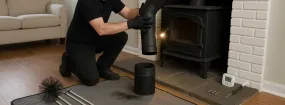
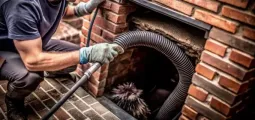
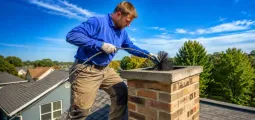
You know it is time when the flue shows visible buildup or the fire starts behaving differently. With everything cold, shine a flashlight up past the open damper or into the stove outlet: a layer of soot or creosote that you can scrape with a poker is a common sign. Other clues include fires that are harder to start or keep going, smoke lingering in the room, a strong smoky smell, black flakes falling onto the hearth and stove glass that darkens quickly. If nobody remembers the last cleaning, that alone is a good reason to book one.
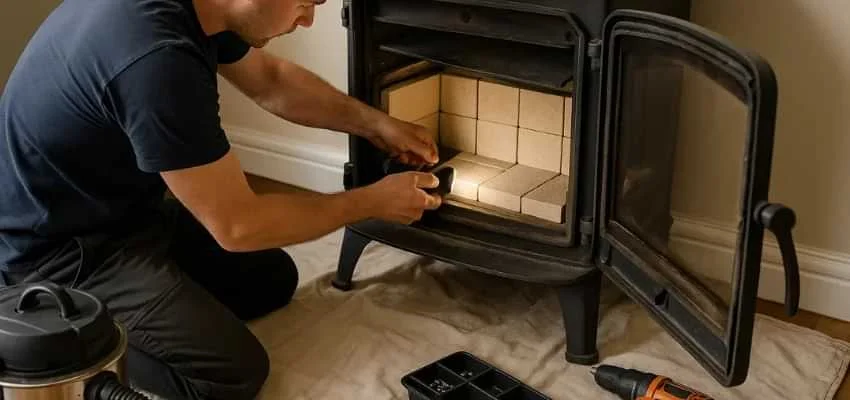
Most stove repairs we handle are replacements of wear parts rather than major surgery. A stove heats and cools again and again through a season, and the parts that take the most punishment are built to be swapped. Door rope is usually first, since a tired gasket changes how the whole stove burns. Firebricks crack from heat and from logs dropped in too hard. Baffle boards and secondary air tubes warp when a stove has been run too hot. We also replace handles, latches and hinges that loosen, and reseat glass that has shifted in its frame. A cracked body is a bigger conversation.
The old rope gasket is pulled out of its channel, and the channel is scraped clean of old cement. A new fiberglass rope of the correct diameter and density is set into a bead of high-temperature gasket cement, pressed into place and trimmed so the ends meet without overlapping. The door is then closed to seat the rope, and the stove is run with small fires at first while the cement cures. A simple test afterward is closing the door on a strip of paper: it should be hard to pull out at several points around the door.
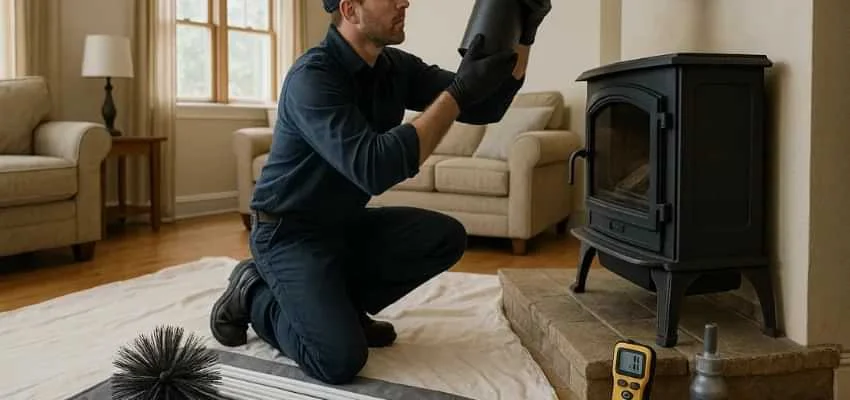
The schedule depends on how much you burn and how cleanly, more than on the calendar. For a household with occasional fires, a yearly visit usually finds a light layer ready to come out. Someone heating with a stove every day may need cleaning before the season ends, especially if the wood is not fully seasoned. Signs between visits help too: black flakes on the hearth, slower starts and darker glass all suggest buildup is growing. Jot down the date of each sweep along with how heavy the deposits were, and after a season or two the right interval becomes clear.
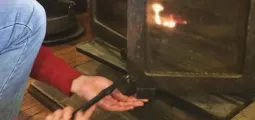
Burning dry wood with enough air and keeping an eye on the stove’s condition keep it running well between cleanings. Give each new fire a hot start with the air control open, then turn it down gradually rather than shutting the air right down overnight, which produces more creosote. A stove thermometer on the pipe or top helps you stay out of both the smoldering range and the overfiring range. Empty the ash pan regularly, wipe the glass when it is cool and check that the door still latches firmly. If smoke escapes or the glass blackens quickly, book a check.
It varies with the material, and we give every customer a specific answer before we leave. Mortar holds moisture after it is laid, and a roaring fire drives that water out too fast, which can crack fresh joints or pop new firebrick. That is why we suggest waiting through the full cure period and then building a few small, short fires to bring everything up to temperature gradually. Stove repairs follow the same idea on a smaller scale: a new rope gasket, for example, settles in over a couple of gentle burns. Caps, screens and dampers can be used immediately.
Evidence is how you tell: a repair that is truly needed can be shown in photos or footage and explained in plain words. We never mind being the second opinion, and we are happy when homeowners get one on our own quotes. A solid quote breaks the job into steps, lists materials and says what happens if more damage turns up once work begins. When a recommendation feels like a lot, ask what would happen if you waited a season. A straight answer to that question, with the risks spelled out, is one of the clearest signs of a trustworthy quote.
We know most people are juggling work, family and errands. Let us know which days and times are easiest and we will try to match them. Choose a time for wood-burning stove repair and the Chimney Sweep Port Coquitlam team will confirm it with you.
A swept flue and plain answers: Chimney Cleaning in Port Coquitlam
Enjoy the fire after Chimney Sweep in Port Coquitlam
From roof cap to firebox, Chimney Sweep Services in Port Coquitlam
Ready for the season with Fireplace Experts in Port Coquitlam
Glass cleaned without scratches: Gas Fireplace Cleaning
Catch a weak thermocouple early with Gas Fireplace Maintenance