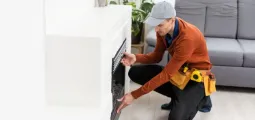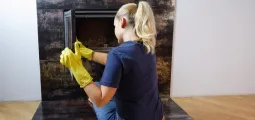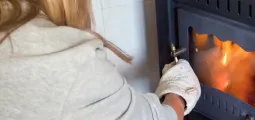
Nobody needs to panic about a chimney, and nobody should ignore one either. The sensible middle ground is knowing what to watch for and when to bring in help. If “chimney odor removal” is what you typed, this page lays out that middle ground for people in Port Coquitlam: what chimney odor control involves, what a technician looks at and what you can keep an eye on between visits, all in plain terms and with the reasoning behind each answer.
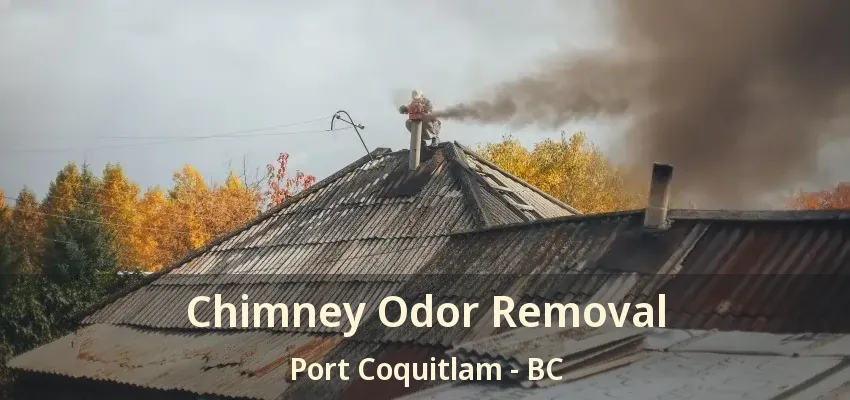
Creosote is the residue that forms when wood smoke cools on its way up the chimney and its tars, gases and moisture condense on the flue walls, and it is dangerous because it burns easily and very hot. A thick layer can catch from a stray spark or an unusually hot fire, and the resulting chimney fire can crack liners and push heat toward nearby framing. Creosote builds faster with damp wood, smoldering fires and chimneys on cold outside walls. It may look like black flakes, a sticky tar or a hard, shiny glaze. If you see any of these on the damper or around the firebox, book a sweep.
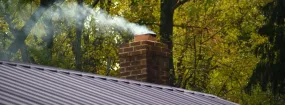
The obvious signs are noise, smoke and flames at the top, but the ones we look for are what a fire leaves behind. Creosote that has burned swells into a light, porous crust that looks a little like charcoal sponge. Clay tiles crack or shift, metal liners and caps can buckle or turn blue, and the mortar near the top may show heat damage. We sometimes find these marks in chimneys whose owners had no idea anything happened, because a slow fire can burn out on its own. That is why a camera inspection is the usual next step whenever there is any doubt about a past fire.
The type of smell is a useful clue to its source. A sharp, smoky or asphalt-like odor usually comes from creosote, especially in humid weather. A damp, musty smell points to water getting into the chimney through the cap, crown or flashing. A rotten smell often means an animal or nest is in the flue. A smell of rotten eggs is different: it may be gas, so leave the building at once and call the gas utility from outside. Describing the smell when you ask about “chimney odor removal” helps the technician know where to start looking.
Most of the smell fades soon after the deposits are removed, often within a few days of normal ventilation. A faint odor can linger longer in old, porous brick or mortar that has absorbed creosote over many years, and it tends to show up again on very humid days. Closing the damper and running fewer exhaust fans speeds things up. If a strong smell is still there a couple of weeks after “chimney odor removal”, ask for a follow-up look, because a second source, such as water entry or debris on the smoke shelf, may still be present.
The cost of chimney work depends mostly on how many flues are involved, how easy they are to reach and how much each one needs. A single fireplace flue on a low roof costs less than a tall chimney on a steep roof or a building with several flues. Stoves and inserts that must be disconnected take longer. Heavy or glazed creosote, a blockage or an animal problem adds time and sometimes a return visit. Camera inspections, written reports, caps and repairs are often priced separately. Ask for a written quote that lists what is included so you can compare companies fairly.
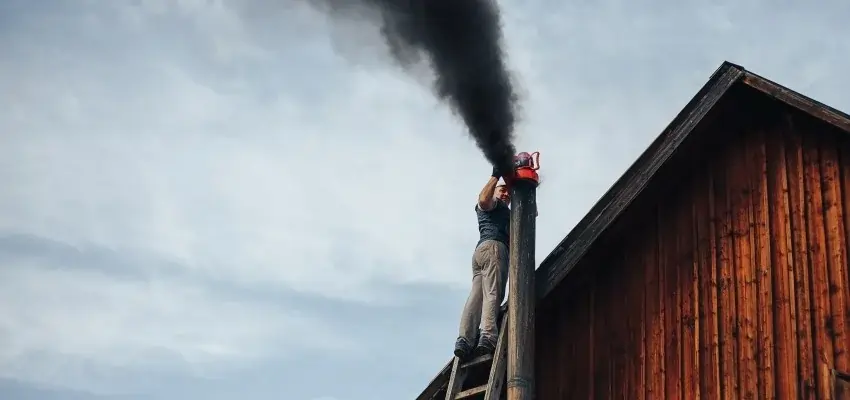
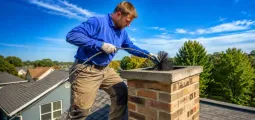
Preparing for a chimney visit mostly means letting the fireplace or stove cool and clearing space around it. Skip fires for at least a day beforehand so the ashes and flue are cold. Move furniture, rugs, screens and decorations a few feet back from the hearth, and take fragile items off the mantel. Outside, make sure the technician can reach the roof: unlock gates, move vehicles away from the walls where a ladder may go and keep pets indoors. Note anything unusual you have noticed, such as smells, sounds or smoke, and have the date of the last cleaning handy if you know it.
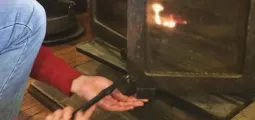
The chimneys we find cleanest belong to owners who burn hot and dry. Creosote forms when smoke cools before it leaves the flue, so anything that keeps smoke hot and thin helps. Well-seasoned wood looks gray, has cracked ends and knocks hollow; heavy, fresh-looking logs hiss and smoke. Top-down fires, with kindling above the larger pieces, tend to burn cleanly from the start. Stove owners who run a brisk fire for a while each morning, rather than smoldering it all night, also see less buildup. A flue that stays lightly coated from one year to the next is the clearest proof the routine is working.
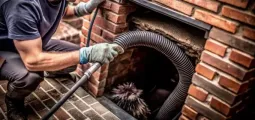
The smell lingers because the source is rarely just the animal; it is everything the animal left soaked into porous masonry. When we clean up after wildlife, we bag out the nest, scrape the smoke shelf and damper, sweep the full flue and look with a camera for anything wedged at tile joints. On brick that has absorbed a lot, we apply an enzyme-based or chimney-specific deodorizer and leave the damper closed while it works. Most odors fade noticeably after that. If one returns on muggy days, there is usually a pocket of material we have not reached yet, and a second look finds it.
Look for a company whose technicians explain what they are doing as they do it; in our experience, that habit says more than any advertisement. Good chimney work is mostly visible only to the person on the roof, so the way a company shares photos, measurements and findings is your window into its standards. Ask how it protects floors and furniture, whether a camera check is included and who will actually come. Notice whether it separates urgent issues from ones that can wait. How a company handles your first phone call tends to match how it will handle your chimney.
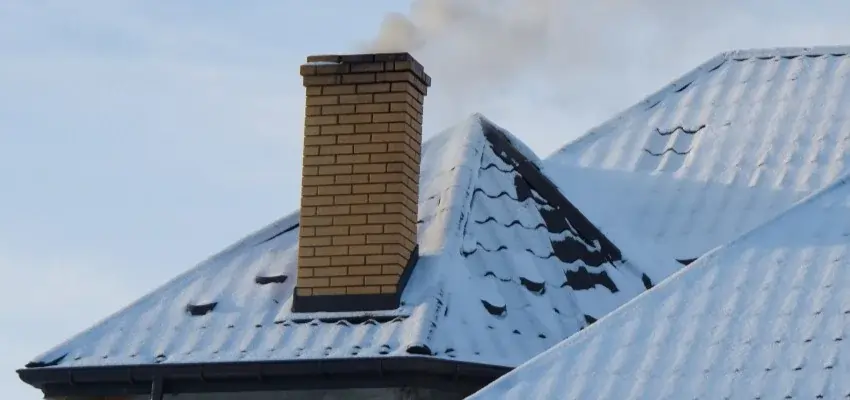
If your home will be busy with visitors, it helps to know everything is in order beforehand. Book chimney odor control a little ahead and enjoy the season without second thoughts. Reserve a time with Chimney Sweep Port Coquitlam in Port Coquitlam.
A swept flue and plain answers: Chimney Cleaning in Port Coquitlam
Enjoy the fire after Chimney Sweep in Port Coquitlam
From roof cap to firebox, Chimney Sweep Services in Port Coquitlam
Ready for the season with Fireplace Experts in Port Coquitlam
Glass cleaned without scratches: Gas Fireplace Cleaning
Catch a weak thermocouple early with Gas Fireplace Maintenance